Flagship project
A three-node, highly available K3s cluster on Hetzner Cloud that runs Salish Sea Wolf LLC's services: source hosting and CI, single sign-on, document management, time tracking, analytics, and this site. Everything from the servers to the dashboards is code, and a merge to main is a deploy.
- GitOps end to end. OpenTofu builds the servers, network, load balancer, and DNS; Ansible bootstraps K3s once; Argo CD reconciles everything after that. There is no kubectl apply step.
- Gated rollout. Five Argo CD sync waves, with a canary that must mount a real SeaweedFS volume before any app is allowed to start.
- Secrets never in git. Only op:// references are committed. The 1Password Operator projects secrets into the cluster at runtime.
- Defense in depth. Authentik SSO with forward-auth on every private route, Pod Security Admission restricted, default-deny NetworkPolicies, and etcd encryption at rest.
- Backups with blast-radius limits. Postgres and app volumes back up to Backblaze B2, each volume with its own scoped key, so one leaked key exposes one service.
You're reading this page through it.
Live app
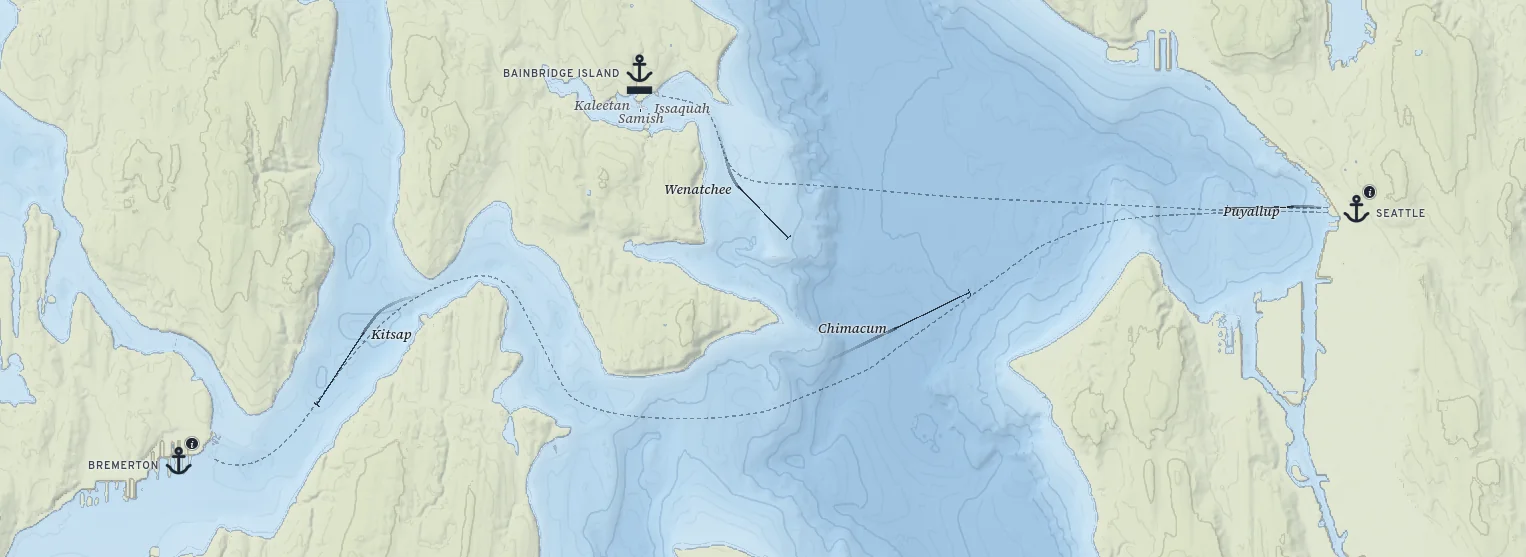
A live map of Washington State Ferries on a 3D model of Puget Sound. Each boat sits to scale on the terrain and sea floor. Behind it, a Rust server records every answer from WSF's public API and works out when you should get in line for a sailing.
- Live boats. Positions, headings, and wakes refresh every 10 seconds. Click a boat or a route and the map flies in to fit it.
- Arrive-by advice. Each sailing gets a recommended arrival time for drivers, based on how similar sailings filled over the last 12 weeks and raised when today is running busier. Where history is thin, it falls back to WSF's own guidance.
- Raw data first. The server keeps WSF's raw answers in Postgres and derives trips, car-deck loads, and on-time records from them. When the logic changes, the whole history gets rebuilt from the source.
- Rust on both sides. The map is Rust compiled to WebAssembly and drawn with WebGPU. The server is axum and sqlx, and the two share one crate of types.
- Shipped like everything else. CI tests against a real Postgres, then publishes images with build provenance and an OCI Helm chart. Argo CD takes it from there.
It runs on the cluster above, next to this site.